

When teaching others how to use FME, we’re eventually asked when and why someone would use the FeatureHolder transformer. Honestly, we don’t use it often. Typically, when running an FME process, one wants the data to process as quickly as possible, and the timing of when the data is written to the destination isn’t usually a concern.
However, there are situations where this isn’t the case. For example, we work with a geodatabase feature class that consolidates point data from multiple sources. Some of these datasets are quite large, containing hundreds of thousands of records, which can take significant time to download and process.
One important aspect to understand about FME is that controlling the exact processing order of data can sometimes be tricky. Initially, when processing the datasets, FME would handle one source at a time, downloading and processing it fully before moving on to the next. This approach posed a challenge because the writer was configured to truncate the destination feature class before writing new data. As a result, the feature class would remain empty for extended periods while each dataset was processed sequentially.
By placing the FeatureHolder transformer just before the writer, the workflow will download and process all datasets first, holding the features until everything is ready. Only then would the data be written to the destination in a single step. This approach significantly reduced the time the feature class remained empty, ensuring more consistent data availability.
But what if your feature class can’t have any downtime at all? Next, we’ll discuss the ChangeDetector transformer and how it can be used to update your data in real-time.
When do you use the FeatureHolder transformer? Add your thoughts to the comments below.

Automating Enterprise GDB Maintenance
This post discusses updating a Python script for an Enterprise Geodatabase, emphasizing the importance of querying database catalogs for identifying…

Spatialty’s Geospatial Philosophy
Spatialty emphasizes a modern GIS approach centered on automation, accessibility, and education, transforming challenges into opportunities and enhancing organizational decision-making…
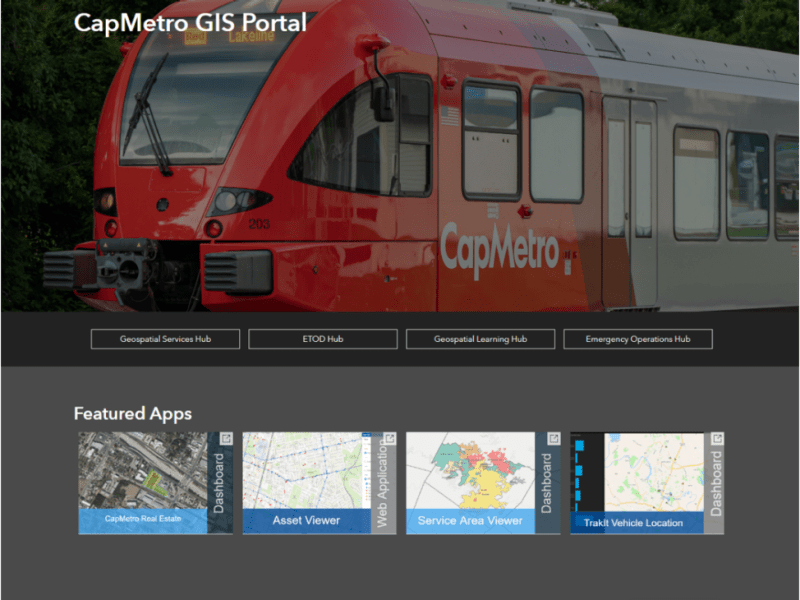
Esri Case Study: From Data Chaos to Clarity: How CapMetro Built an Enterprise GIS for Transit
CapMetro’s recent feature in an Esri case study highlights their development of a cloud-based geospatial infrastructure. Key efforts include automating…
CapMetro’s Success: Automating Transit with FME and ArcGIS
Safe Software highlighted CapMetro’s Geospatial Program in a success story, showcasing the integration of FME and ArcGIS to enhance transit…
Something went wrong. Please refresh the page and/or try again.


 Spatialty